Most Indigenous communities have some level of fire protection in place — volunteer or paid firefighters, some equipment, maybe a training program from a few years back.
But without a clear, detailed picture of where you actually stand, you're making decisions blind.
You can't build a strategy on guesses.
What Does a Fire Protection Assessment Actually Cover?
A Fire Protection Assessment isn't a casual walkthrough. It's a detailed, comprehensive audit of your entire fire protection landscape.
Dion explains:
"A proper fire assessment gives a very detailed overlay of where the nation's at. More detailed than informal needs assessments, and it gets better reception from Indigenous Services Canada."
Here's what gets measured:
Staffing & Certification
- Number of volunteer firefighters
- Number of paid firefighters (if any)
- Current certifications held
- Training standards and compliance
- Certification gaps and expiry dates
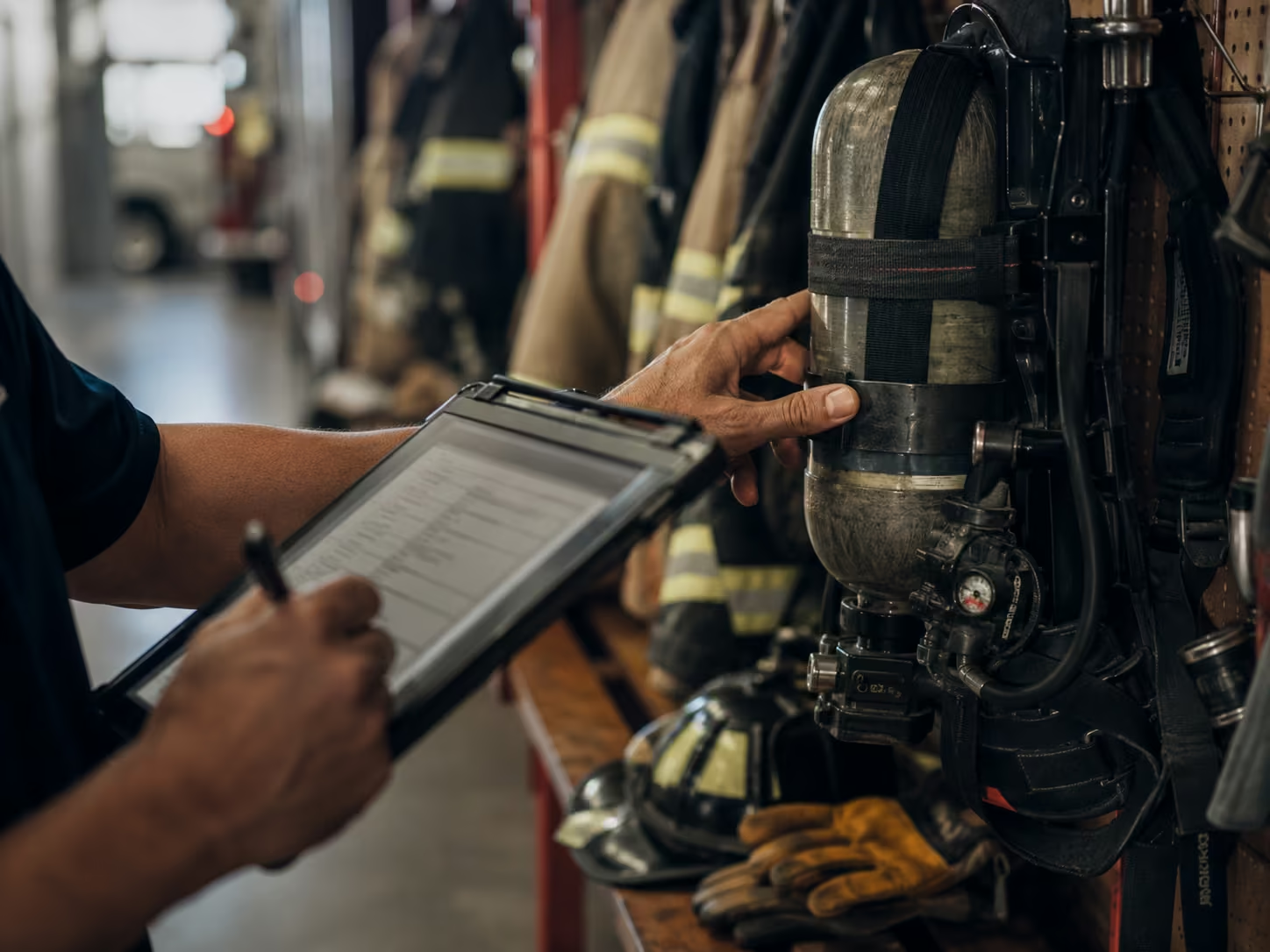
Equipment & Inventory
- All vehicles in service
- Self-contained breathing apparatus (SCBAs)
- Personal protective equipment (PPE) and turnout gear
- Wildfire protection gear
- Vehicle extraction equipment
- Specialized tools and machinery
Operational Profile
- Most common fire types in your area
- Current response capacity and gaps
- Equipment utilization versus storage
Gap Analysis
- Ranked list of critical needs, from most urgent to long-term
- What's missing, what's aging, what needs replacement
- Clear roadmap for where to focus resources
Why Is This More Effective Than an Informal Assessment?
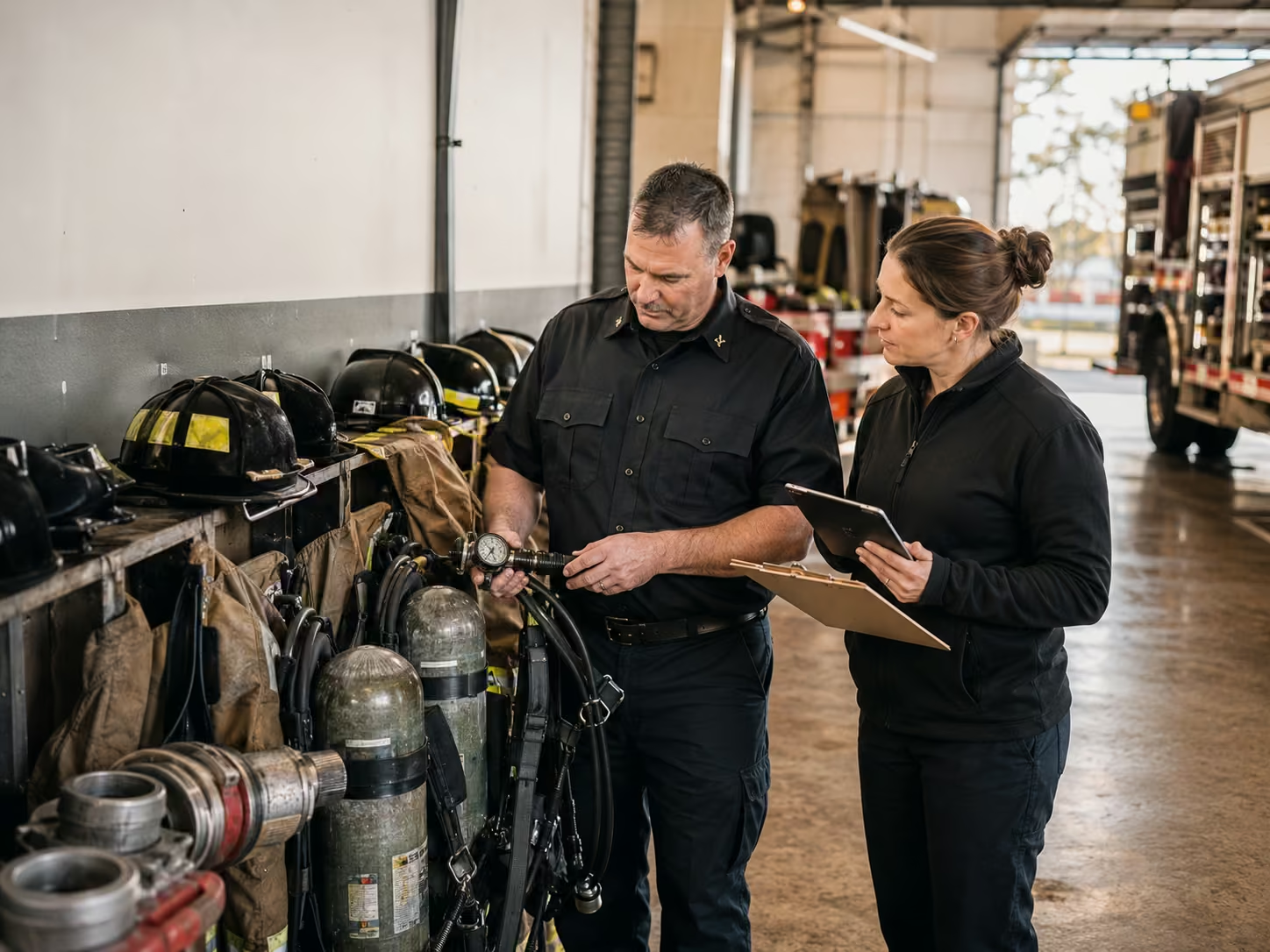
There's a difference between "we think we need equipment" and "here's the exact gaps, ranked by priority, documented for funding."
An informal assessment gives you general impressions. A formal Fire Protection Assessment gives you leverage.
When you walk into a funding conversation with Indigenous Services Canada, with your Chief and Council, or with your own fire service team, you're not estimating. You're presenting documented findings. You know:
- Which training certifications are missing or expired
- What equipment you actually have and what condition it's in
- Which gaps will have the biggest impact if addressed first
- What the cost and timeline look like
This clarity is why ISC receives formal assessments better. They're more detailed, more defensible, and easier to connect to specific funding streams and requirements.
What Happens After the Fire Protection Assessment?
The assessment itself is the starting point, not the end.
"Ongoing support," Dion says. "If training is the most critical gap, we get you the training with certification. Then you move to the next gap — could be a brush truck, then a fire hall. Ongoing support until the entire list is worked through."
Here's how it works in practice:
1. Identify the most critical gap
Training? Equipment? Infrastructure? The assessment shows you which one will move your readiness needle fastest.
2. Build the action plan
Once you know the first gap, you have a clear target: what's needed, what it costs, how long it takes, and which funding streams apply.
3. Move through the roadmap
Address the highest-priority gap first. Once that's in motion, tackle the next one. You're not juggling everything at once — you're making steady progress on what matters most.
4. Get support at every step
We work alongside your community. Whether it's connecting you with training providers, sourcing equipment, navigating funding applications, or coordinating with your fire service leadership, you're not doing this alone.
How This Strengthens Your Funding Application
A Fire Protection Assessment is more than useful for your own planning — it's a powerful tool for funding conversations.
When you apply for fire protection funding from ISC, EMAP, Community Safety & Well-Being programs, or other sources, you need to show exactly what you need and why. An assessment does that.
Read more about navigating the funding landscape in How Fire Funding Works: A First Nations Guide
The assessment also connects directly to the procurement process. Once you know what you need and have funding in place, you can move to equipment sourcing, training delivery, and infrastructure development.
See From Proposal to Training: The TBC Fire Equipment Process for how that journey works.
Get Your Free Fire Protection Assessment
A detailed assessment gives you clarity on exactly what your community has, what it needs, and in what priority order—documented and ready for planning, funding, and implementation.
Get Started | 431-430-1115